Can You Die of a Broken Heart? What the Research Shows
Losing a partner raises your own risk of death, especially in the first weeks. What studies show about the widowhood effect and broken heart syndrome.
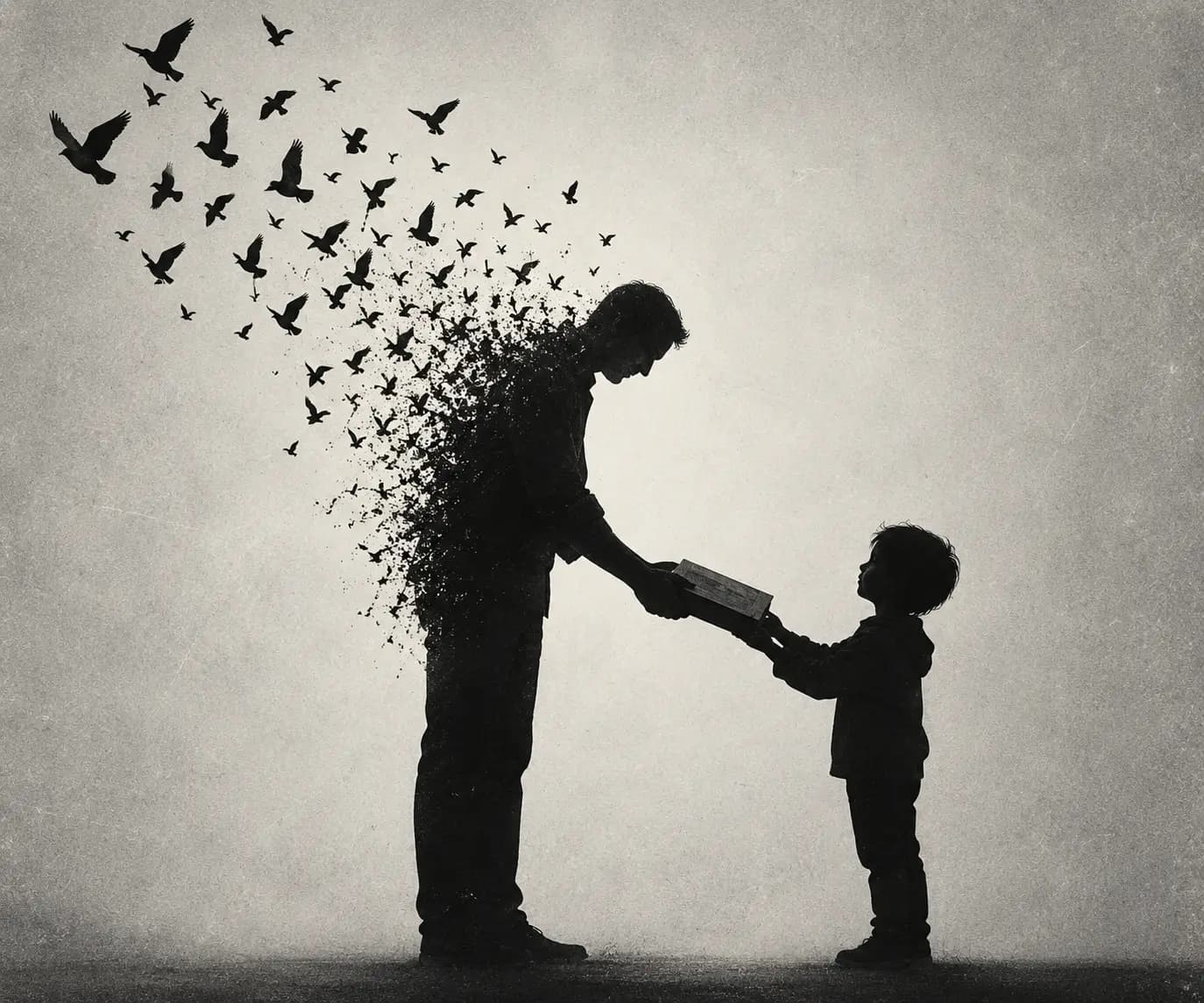
Picture a couple who have been married for 58 years. They met at a dance in their late teens, raised three children, buried both sets of parents and spent their retirement doing the crossword together every morning. One winter she dies after a short illness. Eleven weeks later, he dies too. At the funeral, someone says what everyone is thinking: he died of a broken heart.
It sounds like folk wisdom, the kind of thing people say to make sense of a second loss. But stories like this one are common enough that researchers have spent more than half a century measuring them. The phrase now has two real meanings in medicine. One is the widowhood effect, the rise in death risk that follows losing a spouse. The other is broken heart syndrome, a real heart condition triggered by sudden emotional shock.
Around 62 million people die every year, roughly two every second, as our live death counter shows. Behind almost every one of those deaths is a partner, parent or child who is left behind. This article looks at what happens to them.
The short answer
Yes, grief can kill, though rarely on its own. Bereavement raises the risk of death through several routes: a sudden strain on the heart in the first hours and days, a slower decline in health over the following months, and, for a small number of people, an acute heart condition that mimics a heart attack.
| Way grief raises death risk | When it happens | How big the effect is |
|---|---|---|
| Heart attack triggered by acute grief | First 24 hours to first week | Risk many times higher than normal in the first day |
| Heart attack or stroke after a partner's death | First 30 days | Roughly double the usual risk |
| General widowhood effect | First 6 to 12 months, then fading | Death risk roughly a fifth higher on average |
| Broken heart syndrome (takotsubo) | Hours to days after a shock | Rare, mostly recoverable, but can be fatal |
| Self-neglect, drinking, isolation | Months to years | Hard to measure, adds to the above |
None of these numbers mean that most bereaved people will die soon. The great majority do not. But the pattern is consistent across countries, decades and research methods, and it is strong enough that doctors now treat early bereavement as a period of real medical risk.
The widowhood effect
The first large study came from Britain. In 1969, Colin Murray Parkes and colleagues published a paper in the BMJ titled "Broken heart: a statistical study of increased mortality among widowers". They followed more than 4,000 widowers aged 55 and over and found that death rates in the first six months after bereavement were about 40% higher than expected for married men of the same age. After that, the excess faded. Most of the extra deaths were from heart disease.
Since then, the finding has been repeated many times. The largest single study, by Felix Elwert and Nicholas Christakis in the American Journal of Public Health in 2008, followed around 373,000 older married couples in the US Medicare system for nine years. After accounting for age, health and other factors, they found that losing a spouse raised the surviving partner's risk of death by roughly 18% for men and 16% for women.
| Study | Who was followed | Main finding |
|---|---|---|
| Parkes et al., BMJ 1969 | 4,486 widowers aged 55+, England and Wales | About 40% higher death rate in first 6 months |
| Elwert and Christakis, AJPH 2008 | About 373,000 older US couples | Roughly 18% (men) and 16% (women) higher risk |
| Moon et al., meta-analysis 2011 | Pooled data from over a hundred studies | Around 22% higher risk overall, stronger in men and younger widows |
| Carey et al., JAMA Internal Medicine 2014 | UK primary care records, people aged 60 to 89 | Heart attack or stroke risk roughly doubled in first 30 days |
| Mostofsky et al., Circulation 2012 | Heart attack survivors in the US | Heart attack risk about 21 times higher in the first 24 hours after a loved one's death |
The pattern across these studies is the same. The risk spikes early, it is higher in men than in women, and it is higher when the death was sudden rather than expected.
Our earlier piece on how marriage affects your lifespan explains part of the reason. Many of the health benefits of a long partnership, such as someone noticing symptoms, keeping appointments and cooking proper meals, disappear overnight when one partner dies.
Why the first days are the most dangerous
The most striking single finding comes from Elizabeth Mostofsky and colleagues at Harvard. They interviewed nearly 2,000 people who had survived a heart attack and asked whether anyone important to them had died in the days before. By comparing the timing, they estimated that the risk of a heart attack was about 21 times higher in the 24 hours after learning of a significant death, and about six times higher across the first week. The excess then shrank steadily.
| Time since the loss | Heart attack risk compared with normal |
|---|---|
| First 24 hours | About 21 times higher |
| First week | About 6 times higher |
| First month | Raised, roughly double in some studies |
| Six months on | Close to normal for most people |
Those multiples sound frightening, but they apply to a small starting risk. For a healthy 60-year-old, the chance of a heart attack on any given day is tiny, so even a large relative jump leaves the absolute risk low. Heart disease already accounts for around a third of all deaths on our live counter, and the people most affected are those who already had heart disease, high blood pressure or diabetes.
The biology is well understood. Acute grief floods the body with stress hormones. Heart rate and blood pressure rise, blood becomes stickier and more likely to clot, and sleep collapses. For someone with narrowed arteries, that combination can be enough to trigger a blockage. Our article on how stress kills traces the same pathway over a longer timescale. The sibling piece on resting heart rate and life expectancy shows why a persistently raised pulse matters.
Broken heart syndrome is a real diagnosis
In 1990, Japanese doctors described a strange pattern in patients who arrived with chest pain and the ECG signs of a heart attack, but whose coronary arteries turned out to be clear. On imaging, the bottom of the heart's main pumping chamber had ballooned out and stopped moving properly, giving the heart a shape like a takotsubo, a narrow-necked pot used by Japanese fishermen to trap octopus.
The condition is now called takotsubo cardiomyopathy, or stress cardiomyopathy, and it is widely known as broken heart syndrome. It is usually triggered by a sudden emotional or physical shock: bereavement, a frightening diagnosis, a car crash, a violent argument, even, in a small share of cases, very good news.
| Feature | What the research shows |
|---|---|
| Who gets it | Around 9 in 10 cases are women, mostly after the menopause |
| How common | Roughly 1 to 2% of people seen with a suspected heart attack |
| Typical triggers | Grief, fear, shock, conflict, serious illness or surgery |
| Symptoms | Chest pain and breathlessness that feel like a heart attack |
| Recovery | Heart function usually returns to normal within weeks |
| Death rate in hospital | A few percent, similar to some heart attacks |
The reason women are affected so much more often is not fully known. One leading theory is that the fall in oestrogen after the menopause leaves the heart muscle more exposed to surges of adrenaline. A small number of patients have repeat episodes, and newer research suggests the condition is less harmless over the long term than doctors once believed.
If you, or someone close to you, has sudden chest pain, treat it as a heart attack and call emergency services. Broken heart syndrome can only be told apart from a heart attack in hospital.
Who is most at risk
The widowhood effect is not the same for everyone. Several groups stand out.
| Group | Why the risk is higher |
|---|---|
| Men | Often rely on a partner for social contact and health monitoring |
| Younger widows and widowers | The loss is less expected and harder to adjust to |
| People whose partner died suddenly | No time to prepare, larger stress spike |
| People with existing heart disease | Less reserve to absorb the stress response |
| People who live alone afterwards | Isolation, poorer diet, missed medicines |
| Carers worn down before the death | Exhausted, often neglected their own health |
Men show a stronger effect in almost every study. This fits a wider pattern we cover in why men die younger than women: men tend to have smaller social networks and use doctors less, so losing a partner removes more of their support.
Loneliness carries a lot of the long-term risk. Our article on the link between loneliness and early death shows that persistent isolation is associated with a death risk comparable to heavy smoking. For many widowed people, especially in the 70 to 84 age group, the months after a funeral are the loneliest of their lives.
What actually causes the extra deaths
Researchers have tried to split the widowhood effect into its parts. The causes of death among bereaved partners point to several overlapping mechanisms.
| Cause of death | Rise after bereavement | Likely reason |
|---|---|---|
| Heart attack and stroke | Large early rise | Stress hormones, blood pressure, clotting |
| Accidents | Raised | Distraction, poor sleep, more alcohol |
| Alcohol-related causes | Raised, especially in men | Drinking used to cope |
| Suicide | Raised in the first year | Despair, isolation |
| Chronic diseases | Modest long-term rise | Missed care, poorer self-management |
Some of the extra risk is also explained by couples sharing the same environment. Partners often eat the same food, live in the same area and share the same habits, so they tend to develop the same diseases. Good studies adjust for this, and the widowhood effect remains after they do, but it is smaller than the raw figures suggest.
If grief has become overwhelming, talk to a GP or a bereavement service. In the UK, Cruse Bereavement Support and Samaritans are available, and our suicide statistics page lists further support.
How to protect someone who has just lost a partner
The research points to some practical lessons for families and friends. None of them are complicated, and most cost nothing.
| What helps | Why |
|---|---|
| Regular contact in the first weeks | The danger is highest early, when isolation is sharpest |
| Making sure medicines are still taken | Blood pressure and heart drugs are often forgotten |
| Encouraging a GP check-up | Doctors can review heart risk and screen for depression |
| Shared meals | Diet often collapses after a partner dies |
| Watching drinking | Alcohol use often rises, especially in men |
| Help with paperwork and money | Removes a large source of stress at the worst time |
That last point is easy to overlook. The weeks after a death are full of forms, bank calls and decisions, often made by someone who has never handled the household accounts. Our sibling guides to what to do when someone dies in the UK and what happens if you die without a will set out the practical steps. Planning ahead with something like the When I'm Gone planner can lift a real weight from the person you leave behind.
What this does not mean
It is important not to over-read these findings. The widowhood effect is a population average. Most people who lose a partner grieve deeply and go on to live for many years, often finding new routines, friendships and purpose. Studies of resilience suggest that a majority of bereaved older adults return to their earlier level of wellbeing within a year or two.
It also does not mean grief should be hurried or hidden. Mourning is not a disease. The extra risk comes mostly from the physical strain of the first days, and from the isolation and self-neglect that can follow, not from sadness itself. The research on whether optimists live longer suggests that a sense of purpose and connection, rebuilt slowly, is one of the strongest protections available.
While you were reading
This article takes about 12 minutes to read. In that time, around 1,400 people died worldwide, about 118 every minute. Almost every one of them left someone behind: a husband, a wife, a parent, a child. For some of those people, the coming weeks will be the most physically dangerous of their lives, and a phone call, a meal or a check-up could make a real difference.
You can watch the number keep rising on our live death counter, or see today's running total on the deaths today page.
Data sources: Parkes, Benjamin and Fitzgerald, "Broken heart: a statistical study of increased mortality among widowers", BMJ, 1969. Elwert and Christakis, "The effect of widowhood on mortality by the causes of death of both spouses", American Journal of Public Health, 2008. Moon, Kondo, Glymour and Subramanian, "Widowhood and mortality: a meta-analysis", PLOS ONE, 2011. Carey et al., "Increased risk of acute cardiovascular events after partner bereavement", JAMA Internal Medicine, 2014. Mostofsky et al., "Risk of acute myocardial infarction after the death of a significant person in one's life", Circulation, 2012. Templin et al., "Clinical features and outcomes of takotsubo (stress) cardiomyopathy", New England Journal of Medicine, 2015. Figures are rounded and describe associations seen in large populations.
This article is for informational purposes only and does not constitute medical advice. If you have chest pain or breathlessness, call emergency services. If you are struggling after a bereavement, please speak to your GP or a bereavement support service.
You might also like
Resting Heart Rate and Life Expectancy: What Your Pulse Says
A higher resting heart rate is linked to a higher risk of death, even within the normal range. Here is what the studies found and how to lower your pulse.
Do Optimists Live Longer? What Decades of Research Found
Optimism and a sense of purpose are linked to longer lives and better odds of reaching 85. Here is what the big studies found, and what they cannot prove.
Grip Strength and How Long You Will Live
How hard you can squeeze predicts your risk of death better than blood pressure in some studies. Here is what grip strength reveals and how to improve it.